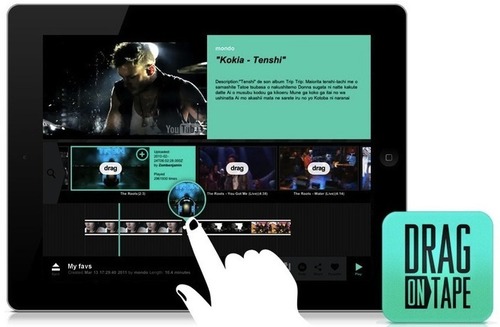
In Steven's Web20Classroom blog, he shares his top 5 favorite teacher tools on YouTube.
See on www.teachhub.com
Related articles
- The 10 Most Important Educational YouTube Channels for Teachers (educatorstechnology.com)
Online learning is a popular option among traditional colleges and it is the foundation of for-profit schools.


As part of my coursework this week I reviewed an original lecture by Dr. Peggy Lant (previously a professor for CalState’s Online Teaching & Learning Program). Her lecture held a great volume of sound advice, but there were a few quotes that really stuck out to me. I’d like to share my thoughts on those quotes in this post.
"Please note that I am trying very hard not to write such phrases as "in moving our courses online" or "in translating our courses to online format." I believe that reinvention is really called for in these ventures, and I know that my language sometimes does not reflect the profundity of the changes I believe we are making. But I keep reminding myself of the extent of our alterations of traditional views of education."
This sticks out to me as I struggle with the task of convincing my fellow instructors that taking a course online is not as simple as dumping a bunch of Power Point slides on to Blackboard. On what seems like a daily basis, I get up on my soap box and preach that delivering a course in the online format really requires recreating the course entirely. It is not enough to simply deliver the information. Reading words on the screen is not learning, it is just that… “reading.” Unless we create meaningful learning opportunities we are doing our students a disservice by offering the course online, not to mention that such negligence also contributes to the already disabled reputation of online education.
"Because change is difficult, when we impose it on others or even suggest it to our colleagues, they can react with hostility. These experiences are painful and can frequently dissuade us from proceeding with a new or novel approach to education. But even more pernicious, I think, than the resistance to change we experience with our colleagues and our students is the resistance to change that we carry within ourselves. I believe that this resistance is the most pernicious and ultimately the most defeating of all."
Having somewhat become the "face" of online learning at college where I teach, I have definitely come up against a few brick walls (faculty members) who are very resistant to change and innovation. I keep hearing "this is just another passing fad" and "online courses aren't real courses." These comments make my blood boil. But after having read Dr. Lant's lecture, as I sit here now passing judgment on my difficult coworkers, I feel somewhat guilty as I have realized that I have been resistant to change myself. For example, when choosing an institution to pursue my Master’s Degree, I intentionally chose a school that had a "brick and mortar" presence and was not only an online school. I made this decision because I gave into the notion that without a building, a college is not a "real" college. I was concerned with the reputation that my degree might hold if it came from a school without an established in-person reputation. To admit this is a bit embarrassing to me now that I think about it. Would my learning be any less valid if the college I went to held only a presence in cyberspace? Would I not really be learning? Would my effort be any less deserving of merit? Would my degree, upon completion, not still count? Would it not still represent all of my hard work and accomplishment? Would the bond I formed with classmates and instructors not still exist? My priority is now to focus my energy on letting go of these preconceived notions of my own. How can I expect to inspire change in the attitudes of those among me when I have not truly changed either?
